
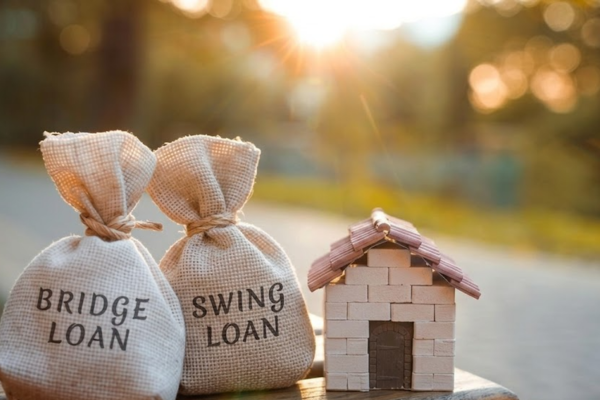
Timing is everything in real estate — and a swing loan can be the difference between landing your next home and losing it entirely. Also called a swing loan, this short-term financing tool helps buyers bridge the gap between purchasing a new property and selling an existing one. Understanding how it works could save your next deal.
Key takeaways:
A swing loan is a short-term loan that lets you tap your current home's equity to buy a new one before your old home sells.

It typically lasts 6 to 12 months and carries higher interest rates than a standard mortgage.
"Swing loan" and "bridge loan" are largely the same product — the name just varies by lender or region.

You can generally borrow up to 80%–85% of your current home's value, depending on your lender.

It's a smart tool in a competitive housing market, but only if you can comfortably carry two payments for a few months.
What Is a Swing Loan?
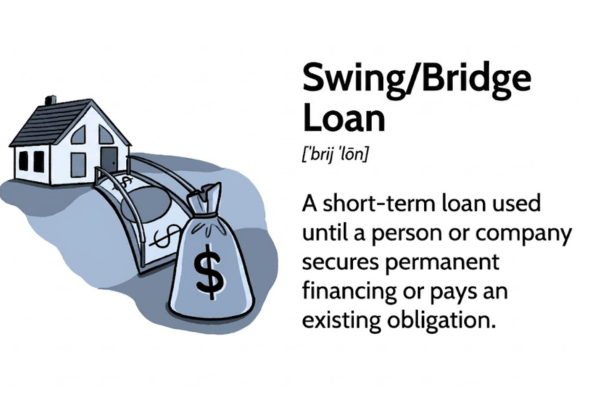
A swing loan is a short-term financing tool that “bridges” the gap between buying a new home and selling your current one. Also called a bridge loan, it lets you tap your existing home’s equity to fund a down payment — before that equity is actually freed up by a sale.
Simply put, swing loans give homebuyers temporary purchasing power when timing doesn’t cooperate. To see exactly how that works in practice, a real-world example makes it far clearer.
How Does a Swing Loan Work? A Real-World Example
Here’s a practical scenario: You find your dream home listed at $500,000, but your current home hasn’t sold yet. A lender issues a swing loan using your existing home’s equity as collateral, giving you funds for the down payment — no waiting required.
Meeting swing loan requirements typically means having sufficient home equity, a strong credit profile, and a clear repayment timeline. Lenders generally expect you to close on your existing home within 6 to 12 months.
The loan is repaid once your current home sells — making the process self-contained, if time-sensitive.
Swing Loan vs. Bridge Loan: What’s the Difference?
This is one of the most common questions people search — and the answer is simpler than you might expect.
In most cases, swing loans and bridge loans are the same product. The terminology just varies by lender, region, and institution. Some banks in the Northeast use “swing loan” while lenders in the West or Midwest prefer “bridge loan.” Both are short-term loans secured by real estate equity, both are used to bridge a financing gap, and both are paid off when the secured property sells.
| Feature | Swing Loan | Bridge Loan |
|---|---|---|
| Purpose | Home purchase gap financing | Home purchase gap financing |
| Term | 6–12 months | 6–12 months |
| Collateral | Current home | Current home |
| Payment structure | Interest-only | Interest-only |
| Paid off when | Old home sells | Old home sells |
| Name used by | Community banks, regional lenders | Larger banks, mortgage companies |
The one distinction worth noting: some lenders use “bridge loan” to describe a broader category that includes commercial real estate financing, while “swing loan” tends to stay in the residential context. But for the average homebuyer in the U.S., these two terms describe the exact same product.
What Are the Typical Terms and Conditions Associated With Swing Loans?
Typical terms and conditions associated with swing loans include:
1. Loan Duration and Repayment
- Term: Swing loans are very short-term, usually designed for 6 months to 1 year, though some can be paid off in a few weeks.
- Repayment Structure: Most loans are structured as interest-only payments on the principal during the transitional period, with a balloon payment for the full principal amount due when the current home sells.
- Exit Strategy: Lenders require a clear, documented plan to repay the loan, typically from the proceeds of the sale of the existing home.
- No Prepayment Penalty: Many lenders allow borrowers to pay off the loan at any time without penalty, allowing it to be paid off as soon as the home sells.
2. Interest Rates and Fees
- Interest Rates: Swing loans generally carry higher interest rates than traditional fixed-rate mortgages, often hovering between the prime rate and prime rate plus 2% or more (e.g., 8–12% or higher).
- Fees: Borrowers should expect higher fees, often 1% to 3% of the loan amount, which may include origination fees, appraisal fees, and title bringdown fees.
- No Escrow: Unlike standard mortgages, these loans often do not require escrow accounts.
3. Collateral and Loan-to-Value (LTV)
- Collateral: The loan is secured by the equity in your current home (and sometimes the new home).
- LTV Ratio: Lenders typically offer a loan-to-value ratio of 70% to 85% of the current home’s value.
- Equity Requirement: Borrowers usually need to have at least 15% to 20% equity in their current home to qualify.
4. Eligibility and Requirements
- Credit Score: Lenders typically require a decent credit score, often 680 or higher.
- Debt-to-Income (DTI): Lenders look closely at DTI, often requiring it to be below 50%, as the borrower may be responsible for payments on three things: the old mortgage, the new mortgage, and the swing loan.
- Approval Time: Approval is fast, sometimes within 72 hours, and funding can take as little as two weeks.
5. Risks and Restrictions
- Double Payments: Borrowers may face the financial strain of making payments on both the swing loan and their existing mortgage until the home sells.
- Default Risk: If the borrower cannot sell their current property to repay the loan within the allotted time, they may default, leading to potential foreclosure.
- Limited Protections: Bridge loans are not always covered by consumer protection laws like the Real Estate Settlement Procedures Act (RESPA), which applies to traditional mortgages.
- Lender Ties: Some lenders will only provide a swing loan if the borrower also uses them for the permanent, new mortgage.
Disclaimer: Terms and conditions vary significantly depending on the lender and local market conditions.
Who Qualifies for a Swing Loan?
Qualifying for a swing loan is similar to qualifying for a conventional mortgage, with a few added layers. Lenders will evaluate:
Equity in your current home. You generally need at least 20% equity to access a meaningful loan amount. The more equity you have, the more you can borrow.
Ability to carry two payments. Because you’ll temporarily hold a swing loan alongside your new mortgage, lenders want to see that your income and debt-to-income (DTI) ratio can absorb both obligations — even if only for a few months.
Credit score. Most lenders look for a score of 620 or higher, though better rates are available for scores above 700.
A realistic sale timeline. Lenders assess how quickly your home is likely to sell. A home in a hot market may make approval easier; a slow market could raise concerns.
What Does a Swing Loan Cost?
Here’s the area where most competing articles go quiet — and where you need to pay close attention.
Interest rates on swing loans are typically 1%–3% higher than current conventional mortgage rates. As of early 2026, that puts many swing loans in the 8%–10% range, though this varies by lender and your credit profile.
Origination fees usually run between 1% and 3% of the loan amount. On a $70,000 swing loan, that’s $700–$2,100 upfront.
Closing costs are similar to a standard mortgage and can add another 2%–5% of the loan amount, covering appraisal, title search, and administrative fees.
When Should You Use a Swing Loan — and When Should You Think Twice?
A swing loan makes the most sense when timing is crucial. If you’ve found your ideal home in a competitive market and can’t afford to wait, this short-term rollover loan bridges the gap — but it’s not always the right tool.
Use one when:
- Your current home has strong equity and a realistic sale timeline
- You’re in a hot market where contingent offers get rejected
Think twice if your existing home has been sitting unsold, or your finances are already stretched. Carrying two mortgages simultaneously is a real risk — and costly to sustain.
Still have questions about whether a swing loan fits your situation? The next section covers the most common ones.
Frequently Asked Questions
How long does approval take?
Faster than a conventional mortgage. Many lenders close within days, according to Ephrata National Bank.
What if my home doesn't sell in time?
That's the key risk. You'll carry both loans until it does — which is why financial cushion matters.
How Does the Interest Rate of a Swing Loan Compare to Traditional Mortgages?
In a swing loan vs traditional mortgage comparison, swing loans consistently carry higher rates. Expect rates typically 2–4% above conventional mortgage rates, reflecting the short-term, higher-risk nature of the product. That premium is the cost of flexibility — and for many buyers, it’s worth it.
Before diving into the specific terms and conditions, understandding this rate gap helps set realistic expectations.
The Bottom Line: Is a Swing Loan Right for You?
A swing loan is one of those financial tools that feels almost invisible — until you need it, and then it can feel like a lifeline.
If you’re a homeowner caught in that frustrating gap between buying a new place and selling your current one, a swing loan gives you the leverage to act decisively in a market that rarely waits. You stop losing properties to all-cash buyers. You stop making contingent offers that sellers dismiss. And you stop feeling like your dream home is just out of reach because of a timing problem.